Sunday, May 15, 2016

Chobe National Park - River Cruises

In Botswana, we stayed in the town of Kasane at the Chobe Marina Lodge. On our first afternoon there we went for our first serious wildlife outing, a cruise on the Chobe River. The river forms the border between Botswana to the south and Namibia to the north. Downriver a few miles is where Botswana and Namibia are joined by Zimbabwe and Zambia in a kind of African four corners, at which point the Chobe becomes the Zambezi. From there it's another 45 miles or so downriver along the Zimbabwe-Zambia border to Victoria Falls.


There's a Botswanan flag on this island in the middle of the river, put there after a dispute with Namibia over where within the wide Chobe River the border should be was peacefully resolved by the International Court of Justice in the Hague.


We saw many animals on the banks. These animals would become quite familiar to us during our time in Southern Africa.

In the ruminant family, Kudu and Impala.


Cape Buffalo.


We saw our first of many Botswanan elephants, in and out of the water.


We were there at the end of the wet season, with no rain expected for about 6 months. During the coming dry season, the river will recede, changing many of these flooded areas into dry land.


Reptiles abounded, including Nile crocodiles:


monitor lizards:


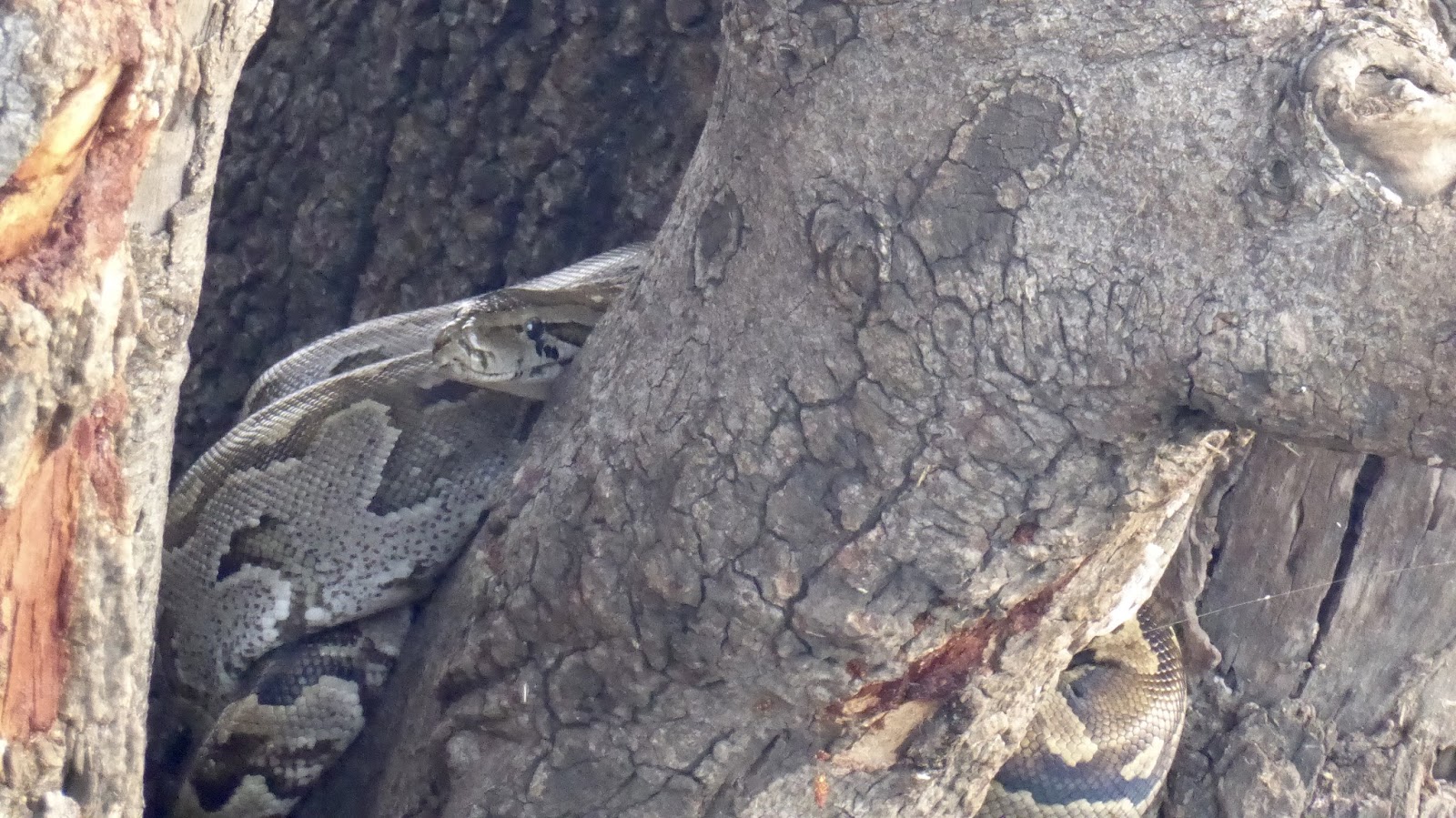
and sizeable rock python coiled in a tree:


We saw many birds.

Malachite kingfisher.


African Darter.


The African fish eagle is an impressively large bird of prey that we saw alongside various bodies of water. It's the national bird of Zimbabwe, Zambia and South Sudan.


And dozens of hippos!


The Botswana side of the Chobe River is a national park, with strict protections for all the wildlife. The Namibian side, not being a park, is used for agriculture and fishing. We saw local fishermen out laying nets for the night. Our guide predicted that Namibia will eventually come around to protecting the area like Botswana has, for the sake of getting the tourism revenue.


Nothing quite like a sunset on the river.


Chobe National Park - Game Drives

Our first safari experience was in Chobe National Park, Botswana. It is 11,000 square kilometers. We only saw a fraction of the park.  We enjoyed 4 game drives in the park during our stay in Botswana. On morning game drives, we arrived at the park a little after 6 am. Afternoon game drives began about 3:30 and continued just after dark. 


The entrance to the park displays a large collection of skulls found in the park.


On one of our morning drives, we encountered a hippo heading back toward the river. These large mammals spend their days in the water and many of their nights on land grazing on grass. It doesn't look like it, but they can apparently run 25 mph (only for short distances, but perhaps long enough to get to you).


The scars are from fights with other hippos.

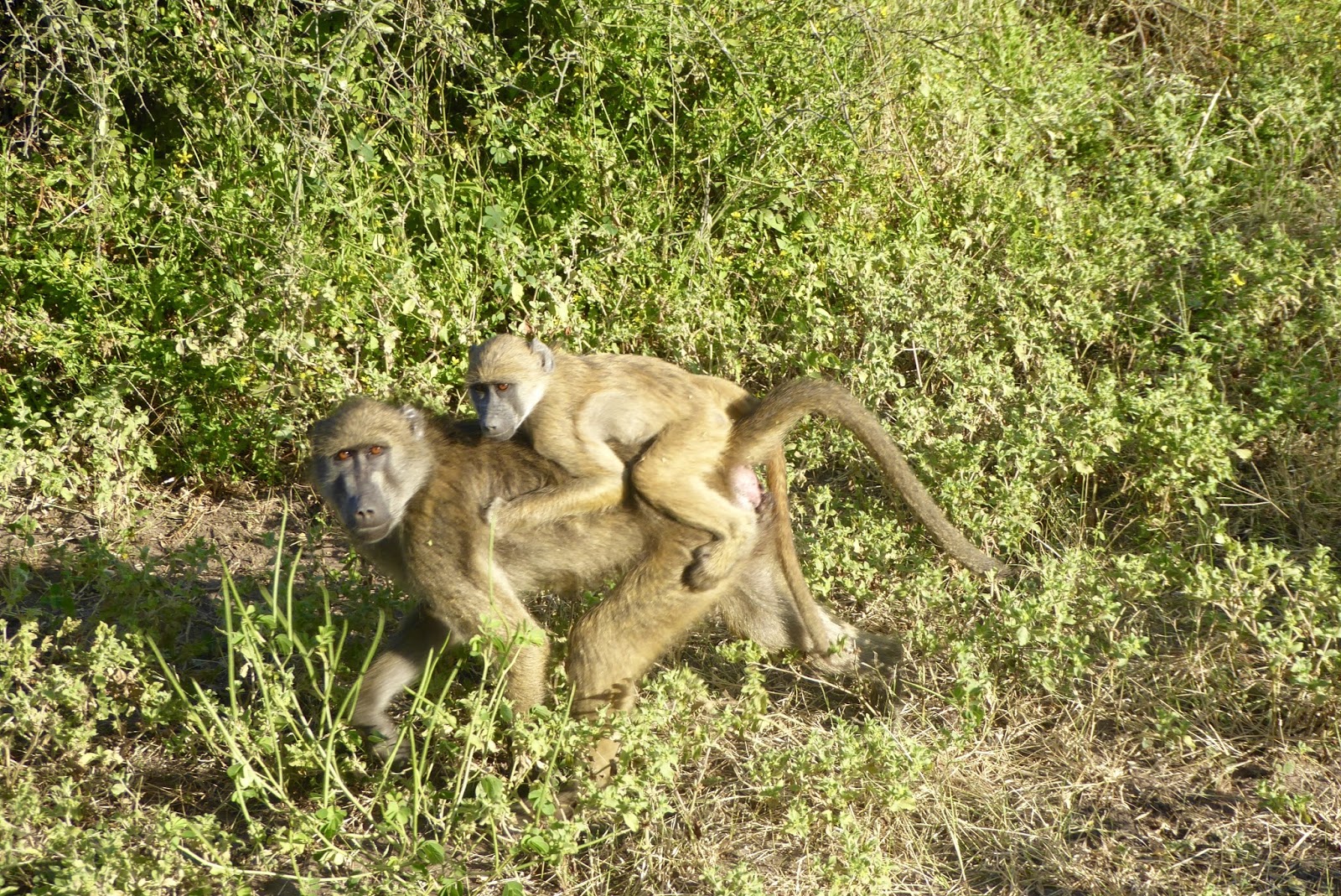
We saw several baboon troops on our game drives. This tree is full of baboons.


Impala like to graze under trees to catch what the baboons drop.


We saw dozens of bird species during our trip. Here's a helmeted guinea fowl!


Here's a secretarybird, a bird of prey that hunts primarily on foot, walking around in the grass to flush out small animals.


Another ground-dwelling bird is the kori bustard, the largest flying bird native to Africa and the national bird of Botswana.


A yellow-billed hornbill.


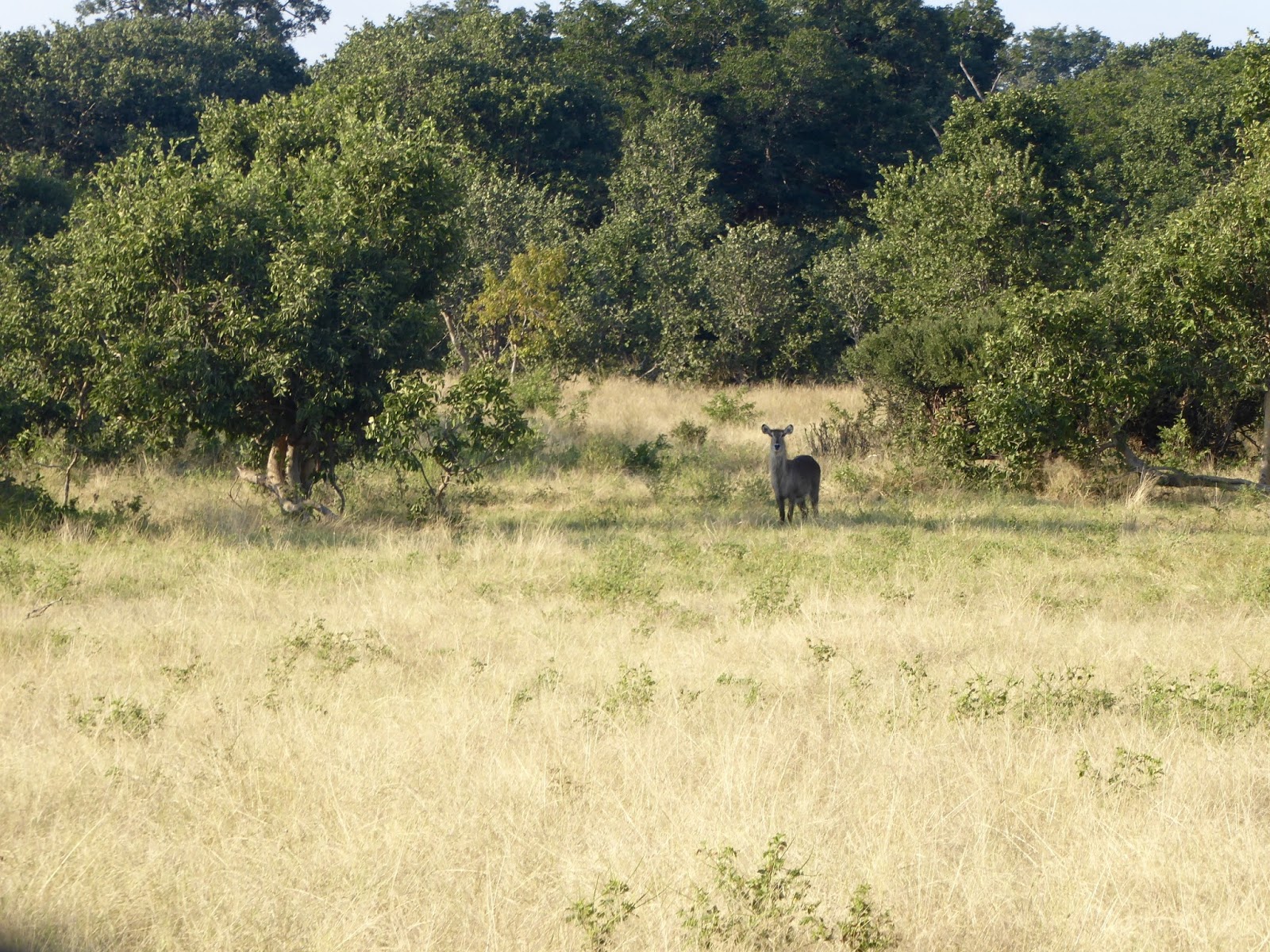
We saw many ruminant animals including waterbuck, the largest antelope they have here.


Impala.


An impala tip-toeing past a resting crocodile.


Kudu.


We also saw hundreds of Cape Buffalo, one of the Big 5 game animals.


Warthogs cross the road.


In Botswana, we rode around in four-wheel drive Nissan trucks that had been modified to carry 10 passengers.


Chobe has the largest concentration of elephants in Africa, accounting for something like 20% of the entire population.


One afternoon game drive, we had our first leopard sighting.


Elephant carcass. We don't know what happened to this one, but Chobe is one of the few places in the world where the lions have adapted to hunt elephants.


Zebra!


Each game drive involves a coffee or beer break. 


We saw numerous giraffes on our game drives. One interesting thing we learned is that giraffes walk with a parallel gait, moving legs on the same side at the same time.


On another occasion, we saw a herd of elephants with many babies.


Sometimes you have to wait for the elephants to cross the road before you can move along.


And we learned where elephant babies come from.


On our final game drive in Chobe we saw a lioness.


Impala were on alert because of her presence.


The baboons didn't seem to care as much.


On our way out of the park on our final game drive we watched two male impalas fighting.


And saw a business of banded mongoose.